What Is Velocity Isokinetics? The High-Speed Evolution of Isokinetic Training
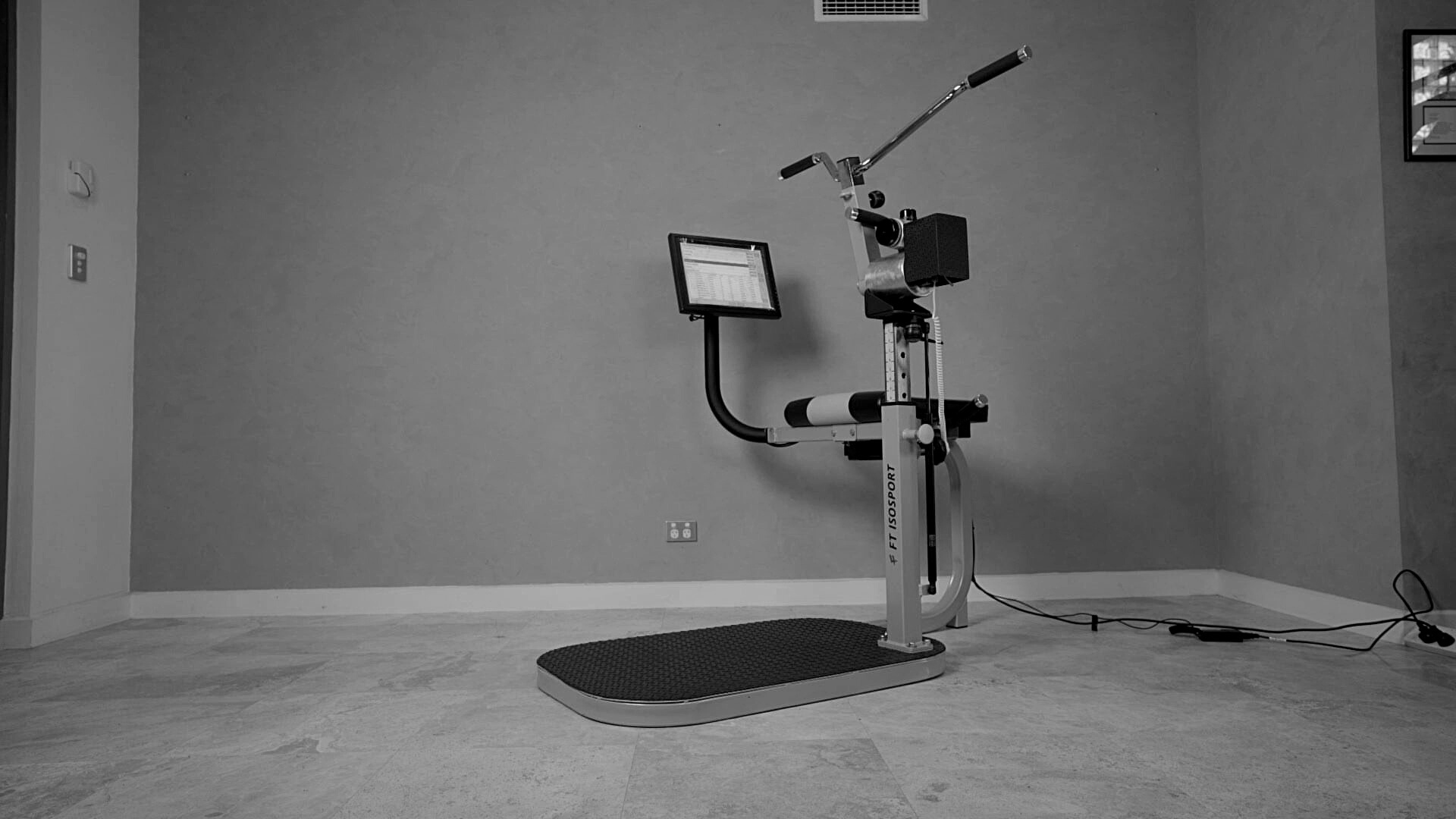
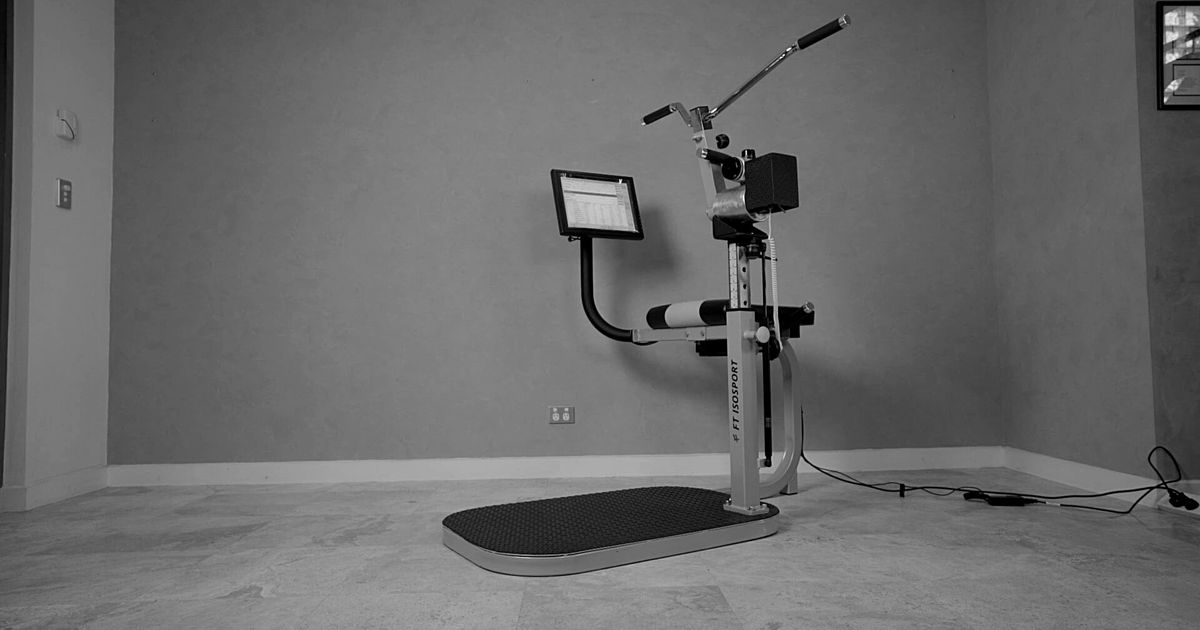
Velocity Isokinetics is an Australian designer and manufacturer of high-speed isokinetic training and rehabilitation equipment. It is the next chapter of a company formerly known as FastTwitch Isokinetics — and the new name signals the idea behind everything we build: take proven isokinetic resistance and update it for high-speed power output.
If you are new to the brand, this pillar post explains what isokinetics is, what “velocity” adds, and how our eight-machine range serves everyone from elite athletes to physiotherapy clinics.
Isokinetics, in plain terms
Isokinetic (or accommodative) resistance holds your movement at a controlled, constant speed. The resistance adapts to the force you apply throughout the full range of motion — push harder and the machine matches you; ease off and it backs off with you. The result is low-impact, controlled soft-tissue conditioning at a speed you choose, with no dropping of heavy weights and no stretch under tension at the end of a rep.
This is very different from isotonic training (free weights and weight stacks), where the load is fixed: the hardest point of the lift dominates while the rest of the movement is under-loaded.
What “Velocity” adds: speed you can measure
The defining feature of Velocity Isokinetics equipment is increased power output, measured in watts.
The physics is simple: Power = Force × Velocity. Because our high-speed system lets you train at velocity, the work you do is expressed as power — and that power is captured in watts we measure and store in the database. That makes watts, not just reps or kilos, the headline number of a session.
Where most isotonic systems track strength units, the emphasis here is on watts of power generated. (For a deeper dive, see Power = Force × Velocity: Why We Measure Watts.)
Dual-concentric: both directions, at speed
Most movements on the system are reciprocating — a push/pull or up/down motion. Because opposing muscles have different strengths, the load settings let you balance the speed and power generated across each pair, in spite of that strength differential. Typical opposing pairs include:
- Quads / Hamstring
- Glute / Hip flexor
- Chest / Shoulders
By engaging the neuromuscular system to drive contraction in both directions — dual concentric training — the system is designed to recruit fast-twitch muscle fibres continuously throughout both directions of movement. That continuous, high-speed loading is central to how the equipment develops speed and power, and it underpins our Dual Concentric Training methodology.
Who Velocity Isokinetics is for
The same technology serves two audiences from a single platform:
- Athletes and coaches chasing speed, explosive power and measurable progress, with resistance that is designed to replicate competition speed.
- Rehabilitation and physiotherapy clinics that need controlled speed, low joint load and the ability to work tissue through a safe range of motion.
Every machine runs on our Computer Managed Training System (CMTS), with training templates preloaded and real-time performance monitoring; completed sessions can then be analysed and shared. To see how the one system spans the full athlete journey, read From Rehab to Performance.
The results users report
Catalogue material for the system describes striking outcomes — and we present them here as user-reported, not proven, until they are independently verified.
Users of the system have reported increases in vertical leap on the order of 5–10 cm and reductions in 40-yard sprint times of 0.1–0.4 seconds within six weeks of training. These figures come from the manufacturer’s user reports and have not been independently verified in a peer-reviewed study. Because the work is continuous and concentric in both directions, athletes often describe sessions as highly demanding, with increased oxygen and blood flow into the working muscles.
The pressure-resistance difference
Under the hood, every machine uses a double-acting hydraulic, pressure-regulated resistance system — what we call the Pressure Resistance System (PRS), built around a pressure-activated control valve (Australian Patent No. 2020101146, which covers the resistance control valve mechanism). It is engineered to maintain accuracy as oil temperature rises, and it should not be confused with air or pneumatic systems. (For the full breakdown, see The PRS Advantage.)
Our 8-machine range
The current catalogue spans eight Australian-made machines. Each links to its own education and product page — browse the full range or start with the one that matches your goal.
- Velocity Machine — a compact, computerised multi-joint trainer for all ages (W 0.7 m × L 0.7 m), covering shoulder, chest, trunk, back, elbow, hip and knee · view machine
- Ankle Machine — a portable ankle and wrist unit with 10 load settings and a 10–300 deg/sec speed range · view machine
- Ferocity Multi — upper- and lower-body power in one, with a removable bench and a 10–500 deg/sec speed range · view machine
- Hip — built to increase running speed, firing the nervous system in the running position with instant glute-to-hip-flexor switching · view machine
- Grand Velocity Machine — the flagship clinical system: an all-in-one isokinetic/isometric/isotonic unit with two motors and 80 individual data fields · view machine
- Knee — high-speed knee training and rehab (10–800 deg/sec) that measures quad-to-hamstring ratios under fatigue · view machine
- Transformer — an affordable, portable all-in-one isokinetic with a shoulder-rehab speciality (5–800 deg/sec) · view machine
- Torso — safe high-speed spinal rotation and core power (2–800 deg/sec) for lumbar stability · view machine
For a side-by-side of how isokinetics compares to the alternatives, see Isokinetic vs Isotonic vs Pneumatic.
Built and backed in Australia
Every machine is designed and made in Australia, with decades of development behind it. To read the founder and engineering story behind the technology, see 100% Australian Made: The Engineer Behind Velocity Isokinetics.
Get started with Velocity Isokinetics
Whether you are equipping an elite training room, a physiotherapy clinic or your own facility, we will help you choose the right machine and configuration. Visit velocityisokinetic.com to enquire about specifications, custom builds, after-sales support and availability.