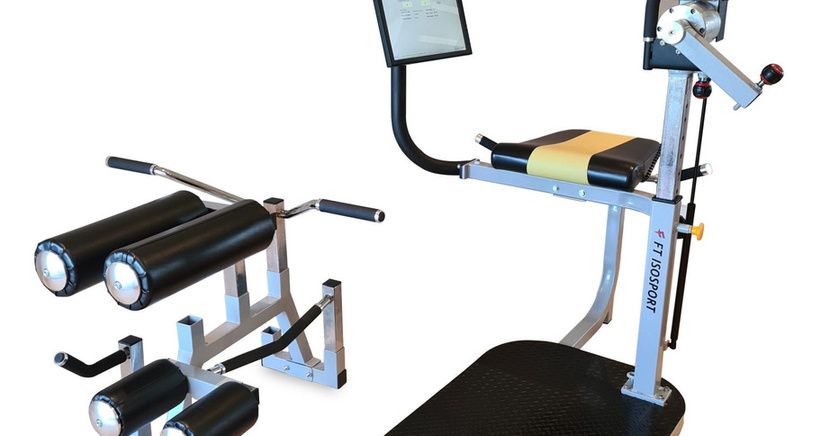
Isokinetic vs Isotonic vs Pneumatic: Which Resistance Actually Builds Power?
Walk into any gym and you will see three very different philosophies of resistance hiding in plain sight. A loaded barbell is one. A pneumatic cable stack is another. A high-speed isokinetic machine is a third. They all “build strength,” yet each trains your nervous system in a completely different way — and they are not equally good at building power.
This guide breaks down isokinetic vs isotonic vs pneumatic resistance, how each one loads the body, and why Velocity Isokinetics chose a double-acting, pressure-regulated hydraulic system for athletes who need to move fast.
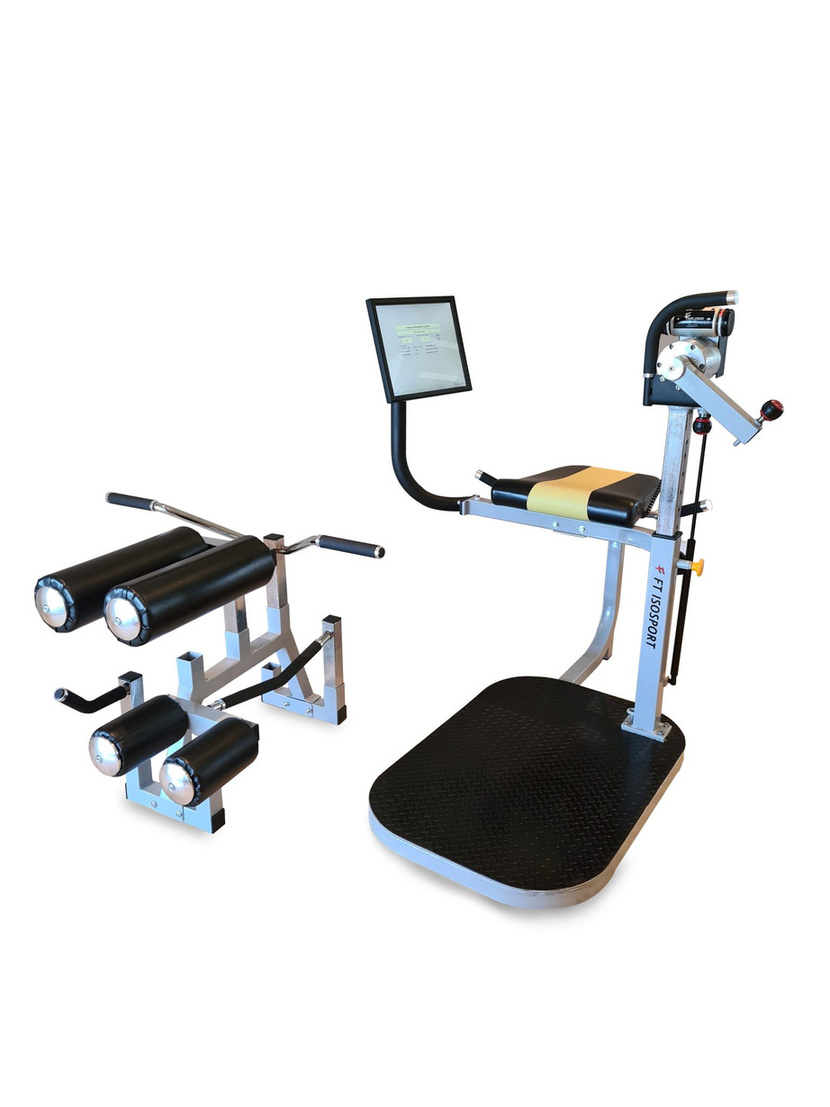
The three resistance types, defined
Isotonic resistance
Isotonic means the load stays essentially constant while you move it — think barbells, dumbbells, and selectorised weight stacks. You lift a fixed mass against gravity through a range of motion, and the resistance you feel depends on the angle, the weight, and how hard you push.
It is the foundation of strength training, and it is excellent at it. But because the weight is fixed, the load is heaviest only where your leverage is strongest — usually the middle of the movement. At the ends of the range, where joints are most vulnerable, you are often moving the same mass with far less mechanical advantage.
Pneumatic (air) resistance
Pneumatic equipment replaces iron with compressed air. Resistance comes from air pressure inside a cylinder, which makes for a smoother, more concentric-focused stroke than a weight stack. Many pneumatic machines allow resistance in both directions of a push/pull and can be dialled up or down instantly.
Pneumatic systems are popular in rehabilitation and conditioning because they remove the momentum and impact of free weights. The trade-off is that air is compressible, so the resistance profile depends on how the air behaves under pressure rather than on a precisely held movement speed.
Isokinetic resistance
Isokinetic resistance works differently. Instead of the load staying fixed, the speed of movement is held constant, and the machine accommodates the resistance to match the force you produce at every point in the range. Push harder and it resists harder; ease off and it eases off — but your limb keeps moving at the same controlled speed.
That is accommodative resistance: the muscle is loaded meaningfully through the entire range of motion, not just where leverage is favourable. The Velocity Isokinetic system delivers this through a double-acting hydraulic, pressure-regulated system — and the catalogue is explicit that this should “not to be confused with air / pneumatic systems.”
The variable that matters: accommodative resistance
The reason accommodative resistance matters is simple. In an isotonic lift, the hardest part of the movement is your strongest angle, so the weak ranges get under-trained and the strong ranges get overloaded. In an isokinetic movement, the resistance matches your output everywhere — so you train the full range at a meaningful load every rep.
For athletes, that matters in the ranges where games are actually won: the start of a sprint, the top of a jump, the fully extended reach. Accommodative resistance loads those end-ranges instead of skipping past them.
Joint load and injury
Heavy isotonic loading puts significant compression through joints — that is partly why free-weight training works, and partly why it carries injury risk, especially at speed or under fatigue.
The Velocity Isokinetic system is designed to minimise joint compression. Because resistance accommodates to the force you produce and movement happens at a controlled speed, there is no decelerating mass and no point where a fixed weight overstresses a vulnerable angle. The result is lower joint load than heavy free-weight work — which is a key reason accommodative, controlled-speed resistance is widely used in rehabilitation settings — rather than zero load on the joints.
DOMS and recovery
A defining feature of conventional resistance training is delayed-onset muscle soreness (DOMS), driven largely by the eccentric (lowering) phase and the stretch under tension it creates. For athletes, DOMS is not just uncomfortable — it can interfere with the next training session or competition.
Because the Velocity system is concentric-dominant and double-acting, it is designed to substantially reduce DOMS relative to eccentrically loaded training. For athletes, that matters: the eccentric phase of a conventional lift is what drives most of the muscle damage and soreness, so a modality that keeps the work concentric is designed to leave athletes better placed to recover for the next session.
Power output: why watts beat reps
Here is where the comparison tilts decisively. Most conventional isotonic systems measure strength — the force you can produce. Power is different: it is Force × Velocity, measured in watts.
Velocity Isokinetics is built around generating and measuring power in watts, a unit the system records and stores in the database for every rep. Where most isotonic systems track strength, the Velocity system tracks how fast you can move a load — the variable that actually predicts explosive athletic performance. We unpack the physics in depth in Power = Force × Velocity: Why We Measure Watts, Not Just Reps.
Dual concentric: training both directions at speed
A further advantage of the Velocity approach is dual concentric loading. Because the resistance is hydraulic and double-acting, opposing muscles are engaged continuously in both directions of a movement — quads against hamstrings, glute against hip flexor, chest against shoulders. Read more on the methodology in Dual Concentric Training.
Pneumatic systems can offer bidirectional resistance; isotonic chains generally cannot. But dual concentric at a controlled, high speed — with the resistance balanced across an opposing muscle pair — is a signature of the isokinetic approach. The system is designed to drive oxygen and blood flow into the muscles and to build resistance to lactic-acid-threshold fatigue, and users report a high caloric demand from sessions — though neither the lactate-threshold outcome nor a specific calorie figure is yet backed by published trial data.
When each type is the right choice
- Isotonic when the goal is raw maximal strength and you have healthy joints, sound technique, and the recovery capacity to absorb eccentric load.
- Pneumatic when you want smoother, lower-impact resistance than iron — often in rehab or general conditioning — with bidirectional loading and without the joint cost of free weights.
- Isokinetic when the goal is power, speed, and explosive output with minimal joint load, training at controlled speeds that simply are not available on isotonic or pneumatic equipment.
For a sense of the speed range isokinetic equipment unlocks, machines in the Velocity range offer variable speed control well beyond conventional kit — for example, the Knee machine’s 10–800 deg/sec and the Ankle machine’s 10–300 deg/sec.
Why Velocity Isokinetics is built for power
Velocity Isokinetics did not settle on isokinetics by accident. The double-acting, pressure-regulated hydraulic system — built around the Pressure Resistance System (PRS) — is what enables accommodative, dual-concentric resistance at the high speeds that develop fast-twitch fibres and measurable power output. See how the technology works in The PRS Advantage, or start from the beginning with What Is Velocity Isokinetics?.
Want to compare the systems for your athletes or clinic?
If you are weighing isotonic, pneumatic, and isokinetic equipment for a high-performance or rehabilitation setting, Velocity Isokinetics can help you map the right resistance type to your goals. Head to VELOCITYISOKINETIC.COM to enquire about the range, request a demonstration, or discuss custom configurations for your facility.