Power = Force × Velocity: The Formula Explained
Is power force times velocity?
Yes, power equals force multiplied by velocity. The formula is P = F × v — power (in watts) is the product of the force you apply (in newtons) and the velocity at which you move (in metres per second). Two athletes producing the same force will generate different power depending on how fast they move, which is why watts, not reps, are the unit that matters in sport.
Strength gets counted in reps. Power gets counted in watts. At Velocity Isokinetics, we built our high-speed isokinetic system around the difference — because in sport, a number that decides whether you win a contested ball, close a gap, or explode off the line is power, not raw strength alone.
This is the science behind every machine we make, and it’s the reason our system measures and stores power in watts rather than tracking load alone.
The Physics of Athletic Power: P = Force × Velocity
Power has a simple, exact definition. It is the product of the force you produce and the velocity at which you produce it:
Power = Force × Velocity
Two athletes can generate the exact same force. The one who applies it faster — at higher velocity — produces more power. That is the whole game in dynamic sport. A sprinter driving out of the blocks, a striker unleashing a shot, a netballer changing direction, a tennis player uncoiling on a serve: the decisive variable is how quickly force becomes movement.
This is standard exercise science, not marketing. The force–velocity–power relationship is the backbone of how strength and conditioning coaches think about explosive output.
Why Watts Matter More Than Reps
Reps tell you volume. Load tells you force. Neither tells you how fast that force was produced — which is precisely what determines athletic performance.
Training that only tracks load rewards the slow grind: more weight, lower speed. That builds strength, but strength without speed is a different quality to power. An athlete who trains only for strength can plateau exactly where sport demands explosiveness.
Watts are the honest currency. A watt is one joule per second — a direct, time-based measure of work. When you train on a Velocity Isokinetics machine, the system captures force and velocity on every rep and multiplies them into a power figure you can see, compare, and improve.
How Velocity Isokinetics Measures and Stores Power
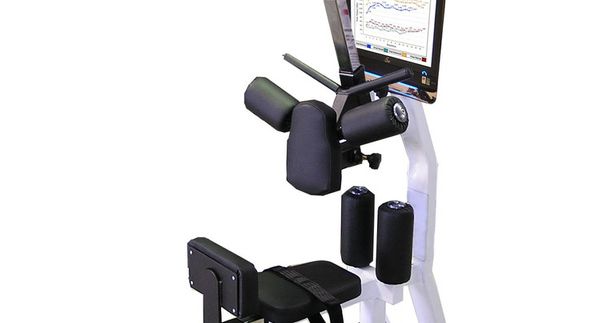
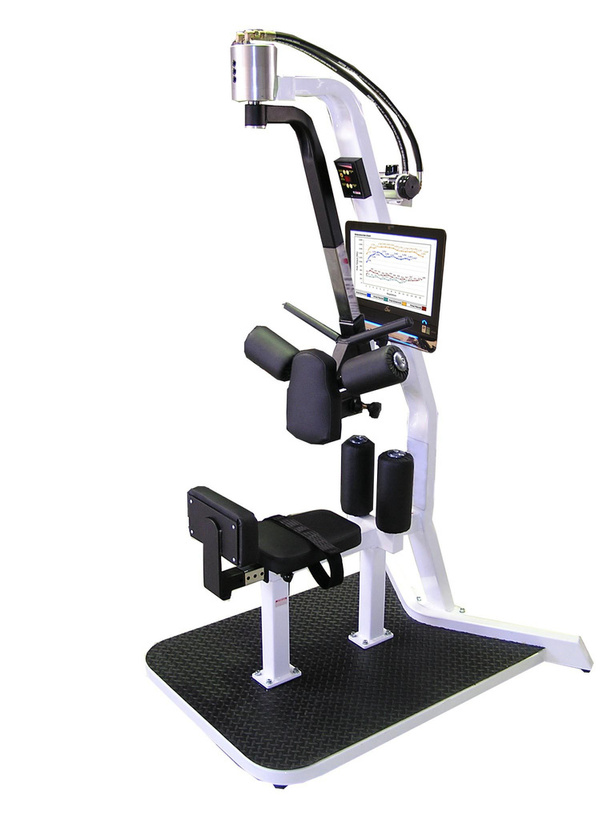
Every machine in our range runs on the same backbone: a double-acting hydraulic resistance system governed by our Pressure Resistance System (PRS), feeding into a Computer Managed Training System (CMTS) on a touch screen display with smart PC software.
The emphasis, deliberately, is on watts of power generated — measured live and stored in the database.
From touch screen to database
As you move, the machine holds a constant, controlled speed and reads the force you apply against it. Force multiplied by that constant velocity equals your power output, displayed in real time. Because the resistance accommodates to you at every point in the range, the data reflects genuine effort across the full movement — not just where you happen to be strongest.
Reports that follow the athlete
Each of our full-feature machines produces the same report suite: Strength, Torque, Endurance, Power, Range of Motion, and Comparison. Power sits at the centre because it is the metric that integrates the others — torque produced at speed, sustained across the set, through both limbs. That gives coaches and clinicians a single, comparable number for explosive output.
Strength vs Power: The Isotonic Trap
Most conventional resistance training is built around isotonic loading — free weights and standard machines where the load is fixed and the speed varies. In our view, most isotonic systems measure and reward strength units only, not the velocity-derived power that comes from moving that load quickly.
There is nothing wrong with building strength. But strength-only training leaves the velocity half of the power equation under-trained. You can add load to a barbell week after week without ever increasing — and without ever measuring — how fast you move it. The result is an athlete who gets stronger in the gym but does not necessarily get more powerful on the field.
Velocity Isokinetics is engineered to close that gap. By running resistance at high, controlled speeds — our machines span variable speed ranges such as 2–800 deg/sec on the Torso machine, 10–800 deg/sec on the Knee machine, and 2–600 deg/sec on the Grand Velocity Machine — the system trains the velocity side of the equation and measures the power that comes out of it.
What This Means for Athletes and Coaches
Once power is measured in watts, coaching stops being guesswork. You can:
- Set a power target instead of a rep target, and watch an athlete chase a wattage goal.
- Compare limbs and directions, spotting the strength and speed differentials between opposing muscle pairs — quads versus hamstrings, glutes versus hip flexors, chest versus shoulders.
- Track progress over time through the database, with comparison reports that show whether a training block actually raised explosive output.
- Bridge rehab and performance on the same equipment, because the power metric scales from low-speed rehabilitation through to high-speed performance.
Because the system is dual concentric — engaging muscle contraction in both directions of movement — it develops power across opposing muscle pairs in a single pattern, which is exactly how sport demands it.
Train to the Number That Decides the Game
If your program only counts reps and load, it is tracking half the equation. Power is force × velocity, and power is one of the qualities that wins the moments that decide matches, races, and trials.
Velocity Isokinetics measures it, stores it, and shows you how to grow it — watt by watt. To see how watt-based power training fits your athletes, your clinic, or your facility, get in touch with our team at velocityisokinetic.com and we will walk you through the system.