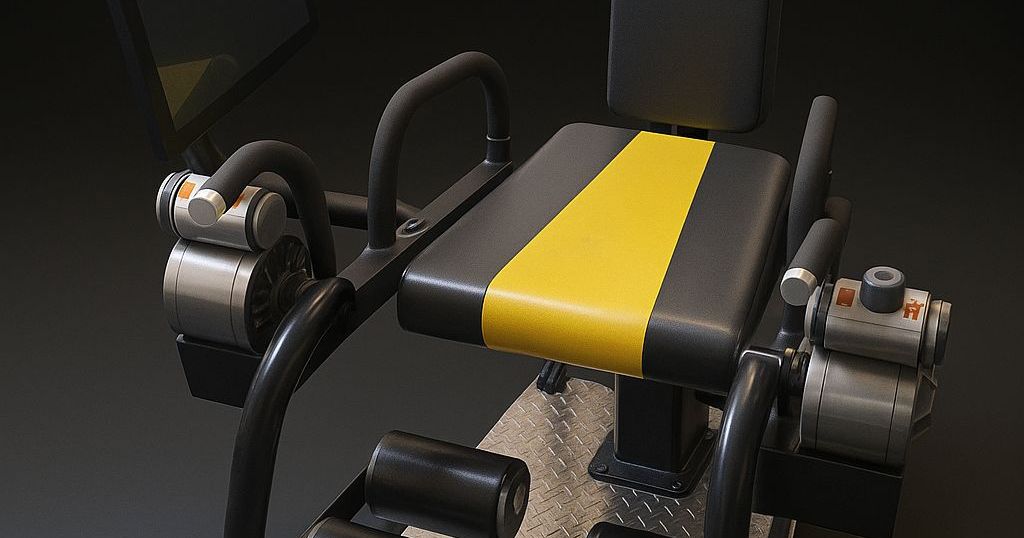
The Isokinetic Knee Machine: High-Speed Knee Rehab and Performance Training
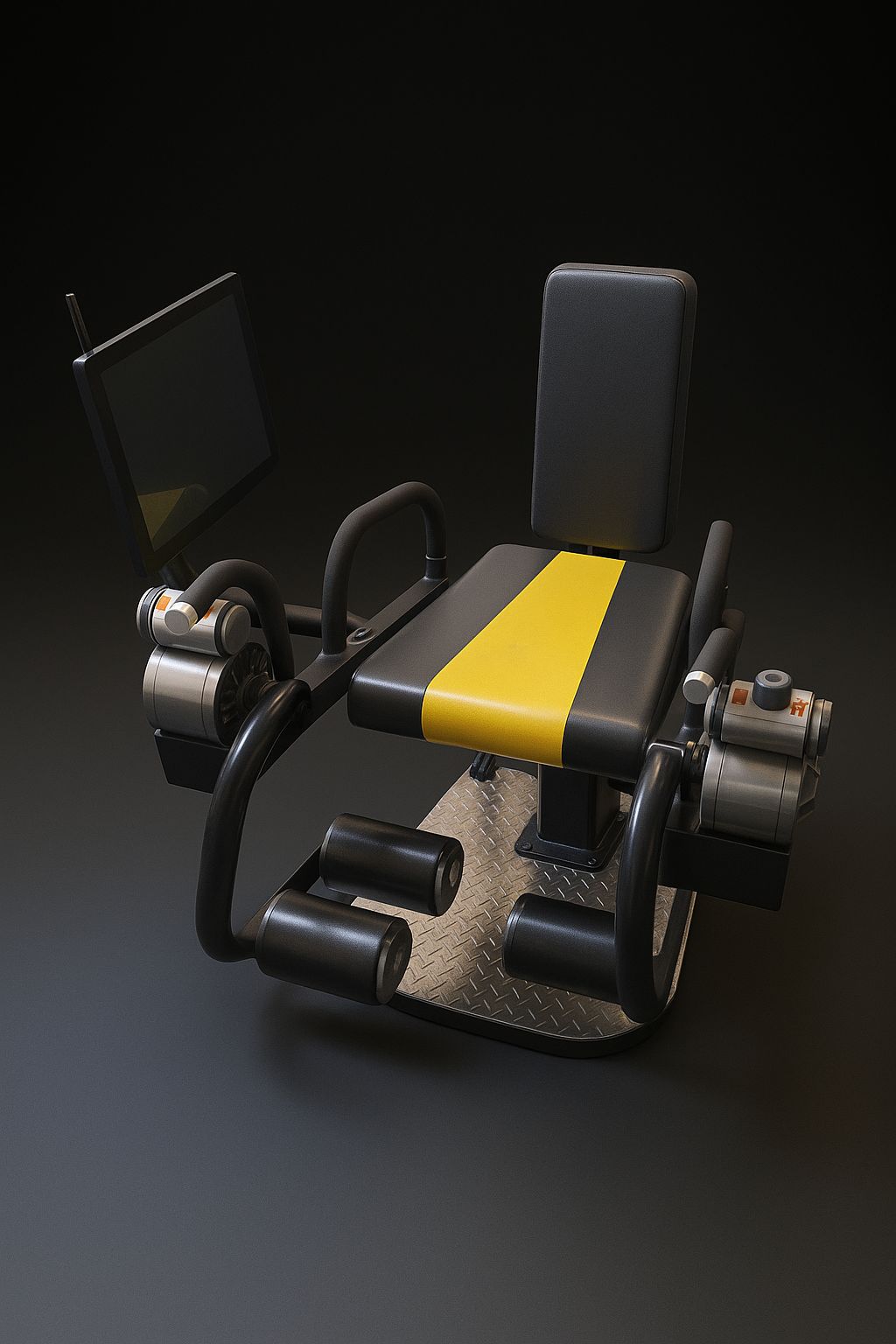
The knee sits at the centre of athletic performance and rehabilitation alike — the joint that drives sprinting, jumping and change of direction, and the joint clinicians rebuild after injury. The Velocity Isokinetics Knee machine is a high-speed isokinetic knee machine built for both worlds: “ultimate speed leg extension / flexion” across rehabilitation, sports performance and training at controlled speeds that are difficult to replicate with conventional loaded training. That makes it a capable knee rehabilitation machine as well as a genuine performance tool.
It pairs real, controlled speed with the data clinicians and coaches need — strength, torque, endurance, power, range of motion and comparison reports, all surfaced on a touch screen.
Why constant speed changes knee training
Most strength training resists you with a fixed weight. A fixed weight only challenges the knee at the weakest point in its range — the movement accelerates where you are strongest and stalls where you are weakest.
Isokinetic resistance works the other way. The Knee machine holds resistance at a constant, preset speed throughout the full range of motion, so the muscle is loaded at every angle rather than only at its weakest. The result is a custom-tailored, high-intensity workout at a controlled constant speed — ideal for improving muscle strength and preparing the knee for high-speed athletic movement.
For the physics behind training at speed, see Power = Force × Velocity: Why We Measure Watts, Not Just Reps.
The speed range: 10 to 800 degrees per second
The Knee machine’s Variable Speed Control runs from 10 deg/sec up to 800 deg/sec. That range spans the whole spectrum from slow, controlled rehabilitation through to sport-speed movement.
At the low end, a clinician can move a post-injury knee through a controlled range with minimal joint load. At the top end, an athlete trains the quadriceps and hamstrings at high angular velocities — the high-speed work that engages fast-twitch muscle fibres (the muscle-fibre type, not the brand) and that conventional loading cannot easily replicate.
Peak knee and thigh angular velocities in sprinting, jumping and change of direction can reach several hundred degrees per second or more, placing the Knee machine’s top end within the range of real sport movement speeds (Dos’Santos et al., 2018).
Quad-to-hamstring ratios, measured under fatigue
Knee health is rarely about the quadriceps alone. The relationship between the quadriceps and the hamstrings — the quad-to-hamstring (Q:H) ratio, often reported in the literature as the reciprocal H:Q ratio — is one of the most closely watched numbers in lower-limb conditioning. Coaches and clinicians monitor it because imbalances between these opposing muscles are reported to be linked to strain risk and reduced performance. (The research literature conventionally reports H:Q rather than Q:H; the conventional concentric H:Q ratio is commonly cited around 0.6, though researchers note its value as an injury predictor is not experimentally established — Coombs & Garbutt, 2002.)
The Knee machine uses an advanced, pressure-activated hydraulic system to measure Q:H ratios — critically, under fatigue. Fatigue-state testing is thought to reveal late-game muscle balance: research in team-sport athletes shows the H:Q ratio tends to fall under fatigue, with the hamstrings fatiguing more than the quadriceps. That fatigue-state data is what informs balanced, targeted programs.
For more on training opposing muscle pairs together, read Dual Concentric Training: Working Opposing Muscles at Speed in Both Directions.
See both legs at once: bilateral display and imbalance
Most machines test one limb at a time and leave you to compare the numbers afterwards. The Knee machine displays both limbs simultaneously and shows imbalance at high speeds — useful for two reasons.
First, side-to-side asymmetry is the signal clinicians watch when clearing an athlete after injury. Second, the machine supports both unilateral and bilateral exercise, so you can train a single leg back to parity and then work both together. Stabilising straps and an adjustable leg position keep the athlete correctly aligned through every set.
Pressure-activated accuracy
The Knee machine runs on the same double-acting, pressure-regulated hydraulic resistance that defines the wider Velocity Isokinetics range. Its advanced hydraulic system uses a pressure-activated mechanism for increased accuracy — the same family of pressure-controlled technology explored in The PRS Advantage: Inside Our Patented Pressure Resistance System.
To see how it differs from air and pneumatic systems, read Isokinetic vs Isotonic vs Pneumatic: Which Resistance Actually Builds Power?.
From rehabilitation to return to sport
The Knee machine is built for the full continuum — from early-stage rehab through testing and monitoring to high-speed performance. That end-to-end philosophy is the same one behind From Rehab to Performance: One System, Every Stage of the Athlete Journey.
For athletes returning from knee injury — including ACL reconstruction — isokinetic knee testing is widely used to inform return-to-sport decisions, because it measures strength, torque and limb-to-limb comparison objectively and at speed. Clinicians use that data to assess whether the injured leg has regained sufficient strength and symmetry before an athlete returns to play. No single strength or symmetry threshold guarantees a safe return; contemporary research (BJSM 2025) questions whether limb-symmetry-index cut-offs alone can predict second-ACL risk, and isokinetic data is one input among many.
Specs at a glance
- Movements: Knee flexion / extension
- Speed range: Variable Speed Control, 10 deg/sec – 800 deg/sec
- Exercise modes: Unilateral and bilateral
- Reports: Strength, torque, endurance, power, range of motion, comparison
- Key features: Rotary and linear motion; hydraulic resistance system; Computer Managed Training System; touch screen display and Smart System PC; heavy-duty frame and handlebar; adjustable leg position; stabilising straps
- Footprint: W 1.2 m × L 1.4 m
- Data: Displays both limbs simultaneously; measures quad-to-hamstring ratios under fatigue
Who the knee machine suits
- Rehabilitation and physiotherapy clinics measuring knee strength, tracking recovery and building balanced programs on a single unit.
- Strength and conditioning coaches developing fast, powerful legs and monitoring for imbalances.
- Athletes preparing for the high-speed demands of running, jumping and field sports.
Train the knee at speed
If you are building a knee rehabilitation, testing or performance program, the Velocity Isokinetics Knee machine brings controlled speed, objective data and bilateral insight together in one compact footprint. Get in touch to discuss configuring the Knee machine for your clinic, facility or team — and how it fits within the wider range introduced in What Is Velocity Isokinetics?.
Ready to enquire? Contact Velocity Isokinetics to talk specs, configuration and availability.