The Hip Machine: Isokinetic Training Designed to Help You Increase Running Speed
Speed lives in the hips. The drive that fires you off the mark, the stride that stretches a breakaway, and the top-end velocity that holds through the finishing line all come from how forcefully — and how quickly — your glutes and hip flexors can contract and switch between roles.
The Velocity Isokinetics Hip machine is an isokinetic hip machine designed to help increase running speed by training the glutes and hip flexors at sport speed. It fires the nervous system against resistance in the running mechanical position, at the same speed you play your sport. See where it sits in the full range in What Is Velocity Isokinetics?.
Why the Hip Machine Is Built Around Running Mechanics
Most hip training happens lying down, seated, or with a cable strapped to an ankle — positions that look nothing like a sprint. The Hip machine takes a different approach. You work in a standing, upright posture that mirrors the running position, so the strength and speed you build are designed to transfer directly to the track, field or court.
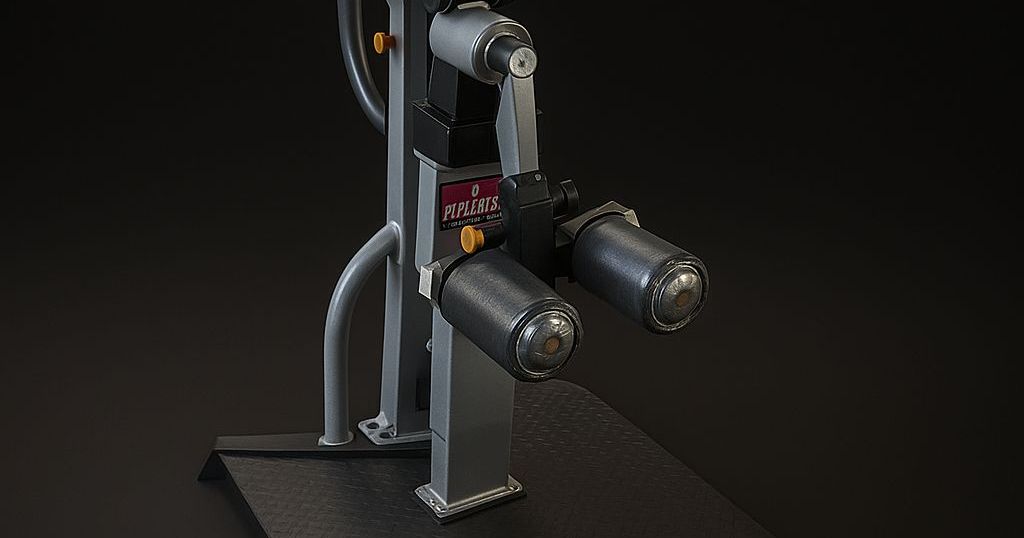
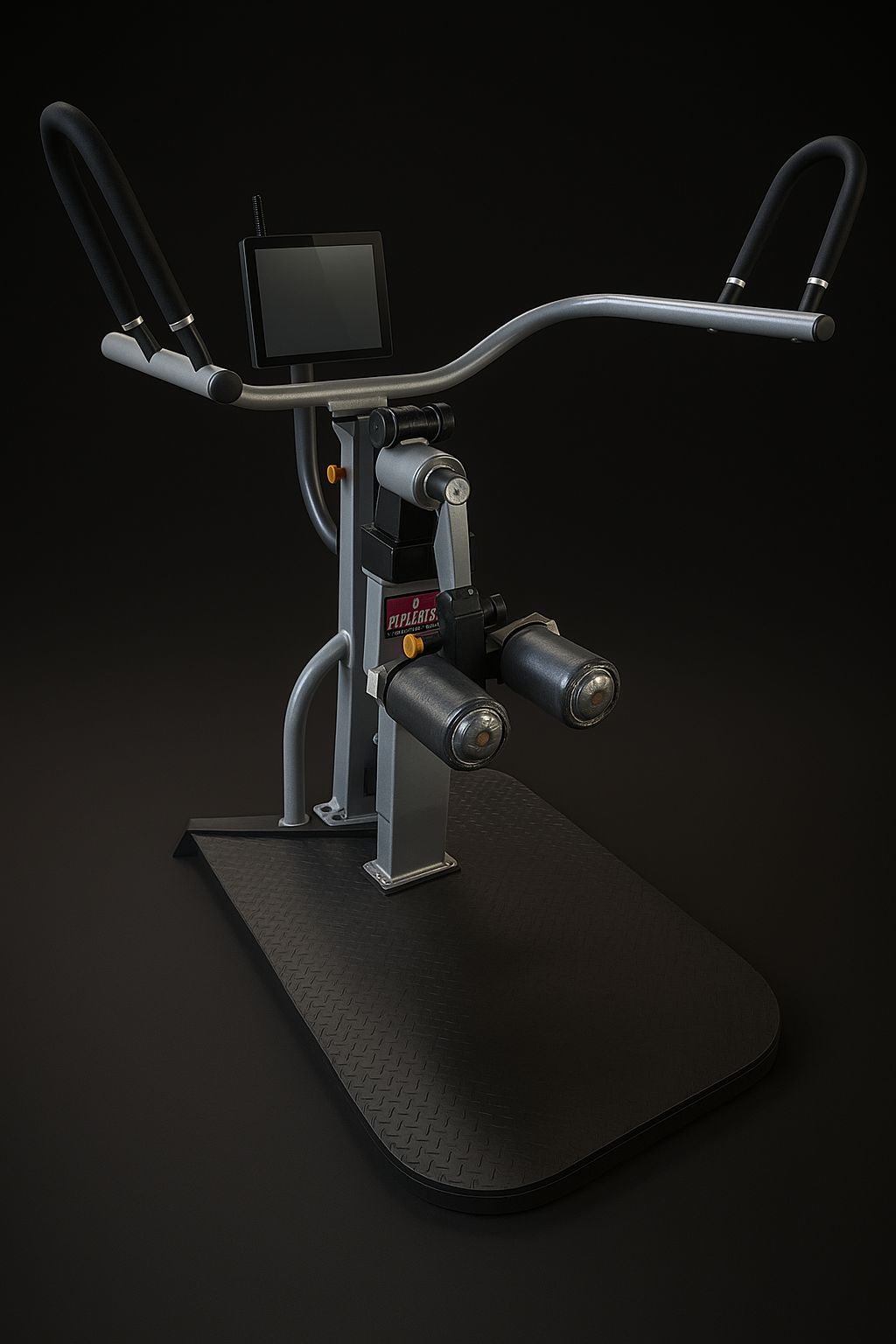
The motion is rotary, driven by a hydraulic resistance system, and the motor is height-adjustable so athletes of different builds can line the axis up with their own hip joint. Adjustable thigh rollers keep the working leg tracking cleanly through hip flexion and extension.
The Glute and Hip Flexor: The Engine of Every Stride
Every stride is a handover between two opposing muscle groups. As one leg drives back into the ground through glute and hip extension, the other leg snaps forward to set up the next step through hip flexion. The faster and more balanced that handover, the faster you run.
This is where the Hip machine’s signature feature comes in: instant switching of resistance between the glute and the hip flexor. Rather than training each in isolation, the machine lets you alternate against resistance within a single movement pattern, engaging high-speed muscle contraction for both sides of the stride.
That’s what makes this a genuine hip flexor machine, not just a glute trainer — and it’s the same dual-concentric principle that underpins the entire Velocity Isokinetics system: working opposing muscles at speed in both directions. (Read more in our Dual Concentric Training guide.)
Speed and Power Development at Sport Speed
Training slow to run fast is a compromise. The Hip machine lets you load the running movement at game speed, so the nervous system learns to recruit muscle at the rates that actually matter in competition.
For running speed training, that matters. Because the resistance is isokinetic — accommodating to the force you apply at every point in the movement — you get maximum challenge through the full range with reduced joint compression compared with heavy eccentric loading, and less of the delayed-onset muscle soreness (DOMS) associated with eccentric work. The result, as framed by the catalogue, is speed and power development built around a machine that measures speed and gives real-time feedback through a touch screen display and smart system PC.
For athletes chasing glute power, isokinetic loading at sport speed is the differentiator. Power, in physics terms, is Force × Velocity — and because the system measures and stores watts, you’re training the unit that counts. (See Power = Force × Velocity: Why We Measure Watts for the science.)
What You Can Track: Reports and KPI Indicators
A machine that trains speed is only as useful as the data it gives back. The Hip machine runs on the Velocity Isokinetics Computer Managed Training System (CMTS), and on every set it can report on:
- Strength
- Torque
- Endurance
- Power
- Range of Motion
- Comparison (between limbs, sessions or athletes)
- KPI Indicators
The addition of KPI Indicators sets the Hip machine apart from a standard rep counter. Coaches and athletes get a read on the metrics that matter for sprint performance — strength and power ratios, asymmetries between left and right, and progress over time — so programming decisions are driven by data, not guesswork.
Specifications at a Glance
- Focus: Hip and glute — hip flexion/extension, glute flexion/extension
- Motion: Rotary
- Resistance: Hydraulic (Velocity Isokinetics pressure-regulated system)
- Footprint: W 1.2 m × L 1.4 m
- Key features: Height-adjustable motor, adjustable thigh rollers, measures speed, touch screen display and smart system PC, heavy-duty frame and handlebar
- Variable speed control: From 10 deg/sec (upper bound to be confirmed)
- Software: Computer Managed Training System with reports and KPI indicators
Want the engineering behind the resistance? See The PRS Advantage: Inside Our Patented Pressure Resistance System.
Who the Hip Machine Suits
The Hip machine is built for athletes and coaches chasing speed — sprinters, footballers of every code, field-sport athletes, and anyone whose performance rises and falls on first-step quickness and top-end running speed.
Because it loads the running pattern at controlled, accommodative speeds with lower joint load than heavy eccentric or axial work, it also fits the rehab-to-performance continuum: returning athletes can rebuild hip and glute function at safe speeds before progressing to full sport velocity. (More on that journey in From Rehab to Performance.)
Train Fast to Be Fast
The Hip machine exists for one reason: to help you run faster, by training the glutes and hip flexors at sport speed with measured, balanced, dual-concentric resistance. If speed is the gap you’re trying to close, it belongs in your program.
See the Hip Machine for full specifications and reports, then enquire with Velocity Isokinetics to see how the Hip machine can fit into your facility or training setup — and what the KPI data could tell you about your athletes’ true speed potential.